
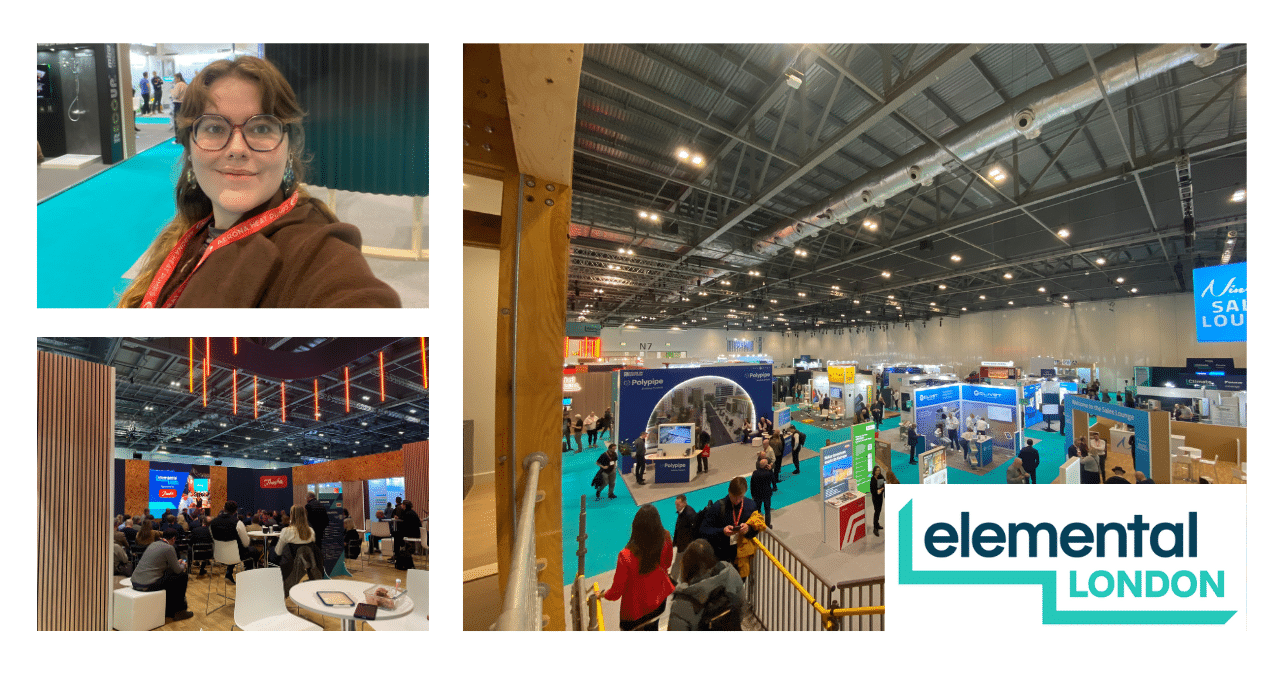
Earlier this week, I attended the first ElementalLONDON event at the Excel Centre. Developed and supported by CISBE, RIBA and RICS, its talks were varied, focusing on different ways organisations can reduce energy use and carbon emissions, especially in commercial and large-scale residential buildings.
Built environment, government and academic leaders came together to discuss the pitfalls and complexities of decarbonisation, especially from an updated standards and regulations viewpoint, as well as low-carbon heating and cooling strategies.
The displays were impressive and technically complex, with the “haus” standing centre stage. An exhibition space and home prototype, it featured cutaways showing its low-emission, regenerative construction methods and fit-outs.
Throughout the day, there was a strong focus on the importance of collaboration, and using designing and engineering methods bespoke to building specifications, rather than a “one size fits all” approach.
Ian Rippin, chief executive of MCS, made a strong point during the keynote: “Complexity is the enemy of compliance.” From policy to practice, exploring challenges against updated compliance is far from simple.
The challenge of decarbonising the NHS
This panel highlighted a lot of the pain points as well as the progress being made to decarbonise one of the UK’s vital public services. Panellist Eshan Sattar, energy manager at the Royal Marsden NHS Foundation Trust, put it well: “How can we care for patients while polluting the very air they breathe?” The panellists agreed that changes needed were neither quick nor cheap, making clear roadmaps incredibly important.
Panellists discussed how the NHS was working to remove fossil fuels from heat systems, aerosols, and improve energy efficiency with new management software. However, they made it clear that a huge backlog of liabilities needs to be addressed first. For example, installing a heat pump would be operationally inefficient if a structure’s old windows are not airtight.
The end of the Public Sector Decarbonisation Scheme (PSDS) and the Public Sector Low Carbon Skills Fund were highlighted as another pain point. Andrea Buckley, technical director – net zero at consultancy Lexica, spoke about their inefficiencies too, including the high-stress, highly competitive “first-come, first-served” funding application processes. Though local and capital funding, as well as local net zero hub support options are still available, she emphasised that the reduction of funding options is still a huge hurdle for Trusts.
Speakers agreed that the 2025-2028 green plan guidance was helping NHS Trusts assess their sustainability plans, but that the roadmap to net zero was still not clear. They also agreed that a phased approach was best, to replace ageing infrastructure like lights, windows and boilers when needed rather than investing in costly and wasteful overhauls.
Heat pumps for large buildings: Bridging the skills gap
At the heat pump panel, the skills gap was highlighted as a significant issue. The UK is still at a young stage of heat pump application, and panellists emphasised that this learning cannot be done in silos; there needs to be continuity of approach and information sharing from equipment providers through to those maintaining the systems. Phil Draper, managing director at Twenty One Engineering, advocated for FM teams, consultants, and installers to better communicate to understand the complexities of heat pumps.
Unlike boilers, heat pumps are technically complex and require careful consideration of building temperatures and remediation work beforehand. The group argued that there has been too much historical copy-and-paste design, which doesn’t work for heat pump applications. If the cart comes before the horse and buildings haven’t had necessary work carried out before installation, the heat pump will fail to perform as expected.
Overall, the main issue facing heat pump integration was communication, miseducation and installing with a “one-size-fits-all” boiler approach.
The electric future
Phil Steele, future technologies evangelist at Octopus Energy, delivered a talk on what technology is available now, and what is driving the electric energy transition. He opened by highlighting “more” – that we’re consuming more electricity thanks to shifts like electric vehicle popularity, and simultaneously changing how we generate and consume energy.
He detailed how Britain has spent over £1 billion this year on wasted wind power, due to curtailment and growing strain on the electricity grid. When it is very windy, the network becomes too congested, and wind farms are forced to switch off. This then requires energy officials to spend on replacement power, which can be from gas-fired plants, at a cost to customers.
Phil discussed different tariffs that try to create cheaper and flexible solutions. Some offer import and export tariff rates, and are directly impacted by wholesale market volatility. Using smart home technologies like solar and batteries, these tariffs are designed to allow users to have cheaper energy prices when wholesale prices fall, especially when their energy is used outside of peak times.
While discussing domestic consumers’ energy transitions, Phil sees a promising future for commercial building use and hopes to see flexible options like these available to businesses in the future, with distribution network operators facilitating this transition.
What’s next?
I saw three key themes emerge at ElementalLONDON 2025: collaborate to stop siloed approaches, develop bespoke solutions, and address both the skills and funding gaps. A huge emphasis was placed on running before we walk, developing the necessary underlying infrastructure before attempting to innovate with heat pump or low-carbon energy strategies.
From NHS Trusts strategically replacing ageing infrastructure to the heat pump industry moving beyond generic boiler-style thinking, success depends on sharing knowledge and planning with foresight.
As Phil Steele’s presentation demonstrated, innovative tariffs and smart technologies are already creating flexible, cost-effective pathways for domestic consumers; now the commercial sector is poised to follow. The challenge lies in the policy, funding, and education keeping pace with the industry’s ambition and the urgency of the climate crisis.
We attend industry events throughout the year. Visit our blog page to find more event recaps like this one, and our LinkedIn to see posts from the ground.