
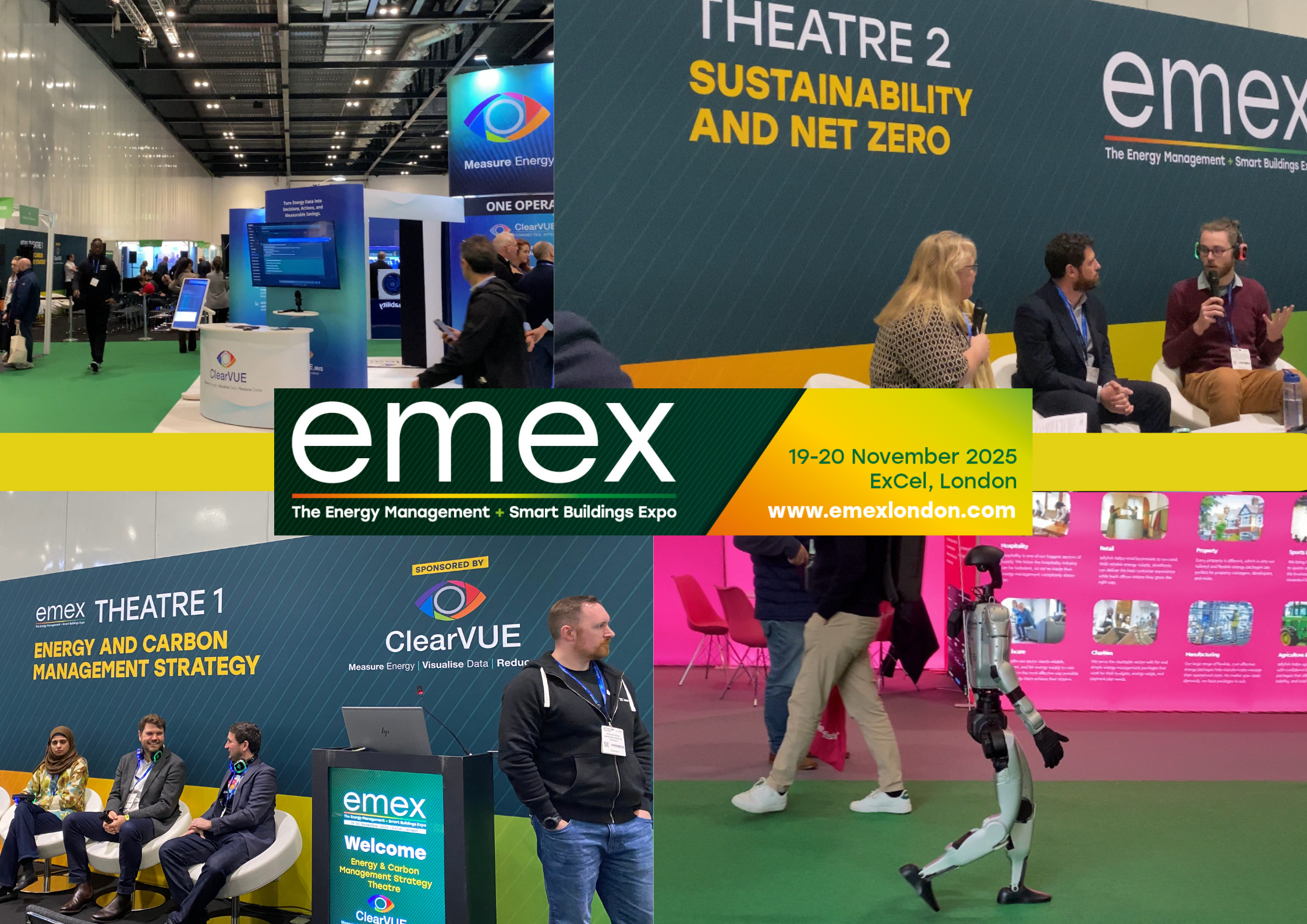
Last week, the Magenta team attended EMEX 2025 at London’s Excel Centre. The energy management and smart buildings expo brought in-demand topics to the stage, spanning two days and attracting over 3500 visitors.
With both human and robot in attendance, the discussions centred around how the industries are collaborating in response to rapidly evolving challenges around decarbonisation, supply chain resilience and technology adoption.
Here are some highlights from the two days:
Aligning occupier and investor priorities
Ibrahim Yate, smart building market analyst at JLL, presented new findings from JLL’s technology survey, outlining occupier and investor priorities. While investors are using technology and AI to organise data and optimise portfolios, occupiers are more concerned with productivity, agility and employee experience. In short, they want value in their lived space.
The session highlighted several challenges. The number one concern was cybersecurity, while many investors admitted they don’t feel adequately trained or resourced to deal with technology and AI implementation. JLL’s research, Yate said, suggests that investors who embrace technology and AI early are likely to “win the market”, but all advice states that investors need to be more tenant-focused.
The UK’s New Hospital Programme
Later that day, there was a session on the UK’s New Hospital Programme (NHP), involving BVN Architecture and DMA Group. The NHP promises to transform the NHS estate with proper funding, but how can it deliver a generational uplift in public healthcare infrastructure?
Strategy director Esme Banks Marr chaired the session, and explored the practical reality for architects, contractors, and FM operators in overcoming cost, skills, and operational challenges, drawing on global expertise and UK case studies. Panellists Steve McGregor and Matthew Blair aired what it will take to turn policy into places that work for patients and the people caring for them.
Building sustainability vs business sustainability
Jo Sutherland, managing director of Magenta Associates, kicked off ‘Building Sustainability vs Business Sustainability’ by asking the audience if they felt confident they were ahead of the game regarding sustainability. Only two people raised their hands.
The discussion highlighted that sustainability can add commercial value to real estate, with products now available that didn’t exist 20 years ago. Buildings cannot avoid using operational energy, but thoughtful design determines how efficiently it works.
Anna MacLean, CEO at sustainability consultancy SRE, added that understanding commercial value in sustainability is still relatively new. She said many people think that sustainability is a cost, so its advocates must educate. For example, there’s no point in installing that office bike shed to tick a box if employees won’t cycle to work. Understanding building usage and employee needs, as well as long-term sustainability goals, allows leaders to make informed decisions that make a difference.
Accelerating supply chain decarbonisation
The panel ‘Challenges in Change: Accelerating Supply Chain Decarbonisation’ brought together Emma Arnold, Thomas Maidment, and Dan Evans to discuss overcoming resistance, resource constraints, and data gaps in the journey towards greener supply chains.
It’s impossible to understate the power of open communication across the supply chain. As soon as organisations issue tenders, suppliers need to know your goals, so keeping that line of communication with sustainability and procurement leaders is vital.
Around 80 per cent of Scope 3 emissions – indirect emissions that occur across the supply chain – are covered by data, but actually getting this data is challenging. Working from the top down is one way to streamline your operations through the supply chain. Figure out which standards to prioritise, ask suppliers to offer data on those standards, and align requests across all supply partners. Don’t let perfect be the enemy of progress.
Final thoughts
EMEX 2025 highlighted that the energy management and smart buildings sectors are focused on preparing for the future, not just financially, but with strategy and innovation. Frank discussions on supply chain decarbonisation and data centre sustainability showcased both the scale of challenges ahead and the practical steps organisations can take today.
Throughout the two days, one theme emerged consistently: data-driven decision-making is foundational to progress. Whether optimising portfolios, reducing operational energy, or proving commercial value, access to reliable data enables smarter choices. The industry is moving beyond rhetoric and box-ticking exercises towards tangible action, but success will require collaboration and prioritising progress over perfection.
Magenta attends industry events throughout the year. Visit our blog page to find regular event recaps like this one.