

Content marketing is one of the core services at Magenta, aided by the fact that we have multiple former journalists on our books. We pride ourselves on creating high-quality content that will resonate with its audience. But it’s equally important to know how to write quality content for SEO.
Fortunately, the two go hand in hand. If you write something that provides a great user experience, chances are that it will also be beneficial for SEO.
In 2025, that increasingly means:
- Following Google’s E-E-A-T principles (Experience, Expertise, Authoritativeness, Trustworthiness)
- Using AI tools carefully – as an assistant, not a replacement for human judgement
- Structuring content clearly so people (and search engines) can quickly find what they need
There are a range of factors that determine the quality of a piece of content. In this blog, I’m going to look at Google E-E-A-T specifically and how it leads to quality content for SEO, and user experience, before sharing a simple framework you can apply to your own site.
What is Google E-E-A-T?
E-E-A-T stands for Experience, Expertise, Authoritativeness, and Trustworthiness. It’s really grown in importance since a major Google algorithm update in August 2018. More recent “helpful content” and core updates have continued to emphasise high-quality, people-first content. It’s not a single ranking factor by itself, but if a website is considering E-E-A-T in all its content then that suggests a holistic approach to SEO and content marketing, which is a good thing.
Experience
Experience is about showing that the author or organisation has first-hand or real-world experience of the topic they’re writing about.
Practical ways to show experience include:
- Specific examples (projects, campaigns, client types) rather than vague statements
- Referencing real scenarios, timelines and outcomes
- Including quotes or commentary from people who actually did the work
Expertise
Expertise means having a high level of knowledge or skill in a particular field. We work with numerous experts in their field, from water system management to chemical-free cleaning, and from architecture to workplace design. These people are highly qualified spokespeople within their field.
This alone is not enough for Google. The content must be engaging and deliver the information that readers want in an accessible way.
You can achieve this through keyword research, focusing on the intent behind various search queries. Answer those queries in a comprehensive and digestible way.
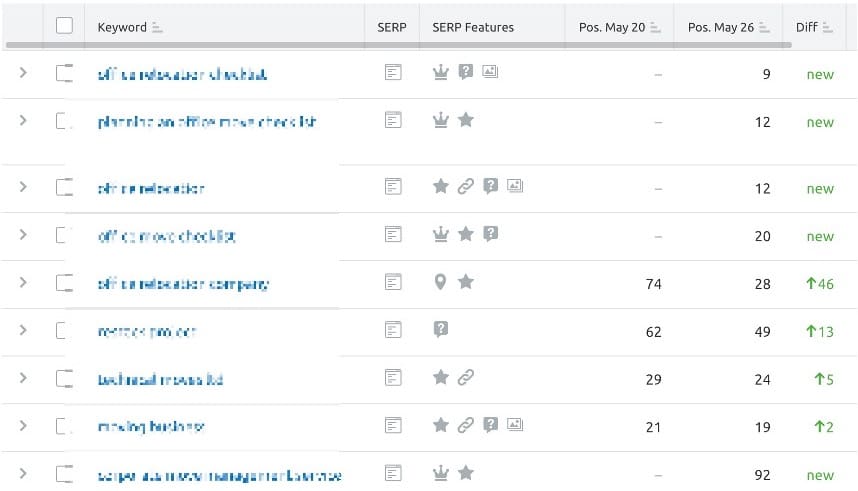
We did this for a current client and created a blog calendar targeting certain keywords. As the table shows, the impact has been dramatic. The company now ranks in the top 20 results for keywords that it was previously unranked for.
On our own site, guides like this one and our article on how to plan an effective content marketing strategy help demonstrate ongoing expertise in digital communications.
Authoritativeness
Authority is a step up from expertise and relates to the brand as well as the individual. Authority is a relative concept but there are some things that can help to create and grow it:
- Backlinks from relevant and authoritative websites
- Mentions in the media, for the individual and the brand
- Content from your website is widely shared
- A high branded search volume – if people are searching specifically for your company
- Reviews, recommendations, and case studies; Google Reviews are particularly useful for SEO
This is where PR, thought leadership and digital work together. For example, our PR campaign for ETI generated national coverage and strong backlinks, boosting both authority and visibility.
Trustworthiness
This is another relative concept. For example, Magenta is a trustworthy source in the built environment, but not in fashion. It’s a critical factor as people will not do business with a company that they don’t trust. Here are some factors that can impact trustworthiness:
- Reviews on Google, Facebook, Trustpilot, and other well-known review sites. Positive reviews are helpful, but it’s equally important to respond to any negative reviews quickly and efficiently
- Clear contact information for the author of the article
- A biography of the author, or a link to one elsewhere on the website
- Having a physical address on your website
- Having business T&Cs and a privacy policy on your website
- Accuracy of content and citing trustworthy sources
For “Your Money or Your Life” topics (such as health, safety, employment or finance), it’s even more important to cite credible sources, avoid exaggerated claims and keep information up to date.
A simple framework for quality content in 2025
If you want a quick checklist for new pages or blogs, you can use this four-step framework:
1. Start with search intent and audience needs
- What question is someone trying to answer?
- Is this informational, commercial, navigational or something else?
- Are you actually the right person or organisation to answer it?
2. Structure clearly for humans and search engines
- Use a clear H1, sub-headings (H2/H3), short paragraphs and bullets where helpful
- Put the most important information near the top
- Add internal links to relevant service pages, guides and case studies
3. Demonstrate E-E-A-T on the page
- Include specific examples, data or stories that show experience
- Make it clear who’s speaking (author byline, role, short bio)
- Link to relevant PR, case studies or awards where appropriate
4. Optimise gently for SEO and UX
- Use your target phrase naturally in the title, intro and headings
- Make sure the page loads quickly and is easy to read on mobile
- Check spelling, clarity and tone of voice before publishing
Key takeaways
Following E-E-A-T as a framework is a good start when considering how to write quality content, even before you consider user experience and SEO. As with other facets of SEO, it does take time to build and there’s no quick win. But if you stick to the E-E-A-T principles, you’ll see long-term benefits.
Recent industry events like brightonSEO have reinforced that:
- Search is getting better at rewarding genuinely useful, well-structured content
- Thin, repetitive or purely AI-generated content is more likely to struggle through core updates
At Magenta, we are experts in writing quality content for SEO and different audiences, ensuring our writing seamlessly integrates with traditional PR and communications. Our work spans PR and media relations, content marketing and search engine optimisation, helping clients join the dots between visibility, credibility and conversion.
Contact us today to chat about how we can support your business.