

Paid media is an effective method for promoting content and driving exposure. It can be a fantastic way to expand your reach as a company, particularly if you’re a small or new businesses looking to build an audience, or help your business overtake competitors by funnelling more of the demand to your business and away from theirs. It has become an effective strategy for better targeting and control of who is seeing your content.
At Magenta, we see paid media as one part of a wider mix, amplifying the stories, reports and campaigns created through our content marketing and PR work, rather than sitting in a silo.
What is paid media?
Paid media is advertising in a traditional sense because it requires the purchase of ad space. Common paid media includes:
- Display or banner advertising
- Search engine marketing (SEM)
- Paid for social media promotion
- Pay-to-play articles (also known as sponsored or native content)
For facilities management, workplace and property brands, this often means:
- Awareness campaigns around new service lines or regions
- Promoting flagship content such as guides, impact reports or research
- Supporting events, awards and key calendar moments with targeted promotion
Display advertisements
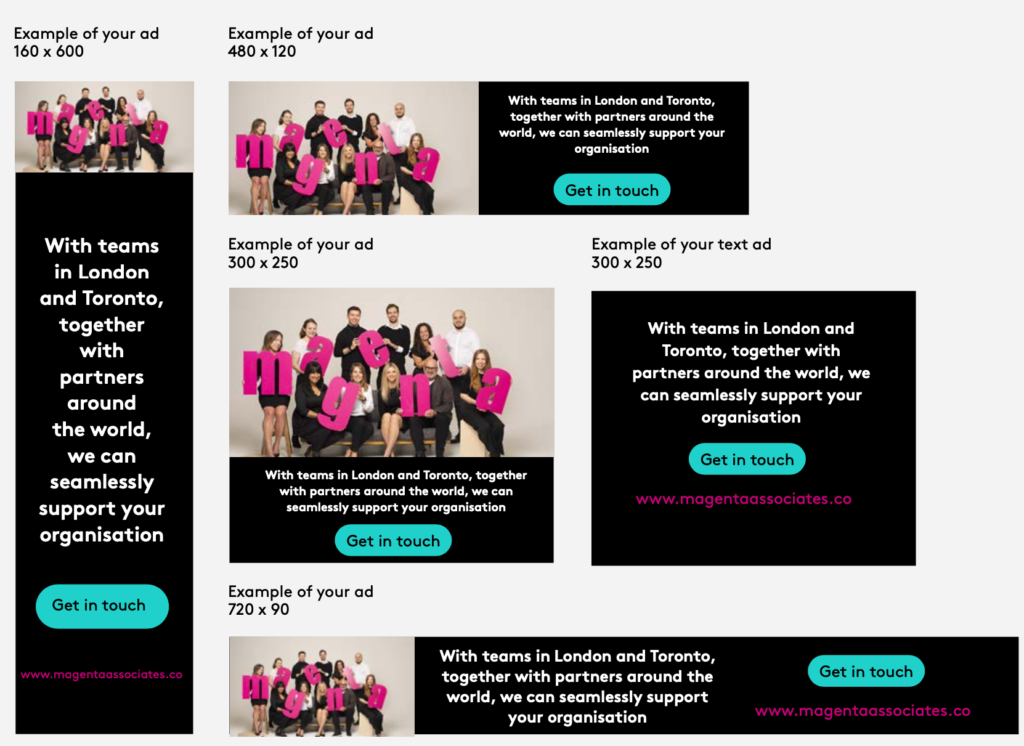
Whenever you browse the internet, you will come across countless display ads. These boxes appear on websites and social media, framing the content that your potential consumers will be using throughout their day. Their position on the page will depend on the type of advert.
Traditional banner ads appear at the top of a webpage above the content. Display ads can offer value across the entire customer journey. However, the style and content of the ads may vary depending on their target audience.
Typically, display ads are used for low cost-per-click top-of-funnel marketing campaigns that reach large volumes of your target audience. This is a great way to populate your retargeting lists for more bottom-of-funnel marketing, especially if your website is not attracting much organic or referral traffic.
They can work particularly well when they spotlight useful resources, such as workplace guides, office move checklists or impact reports, rather than just pushing “contact us” messages.
Paid social media
Like display ads, paid social posts have the potential to expand your reach as an organisation beyond your current fans and followers. They allow great reach to target audience segments, offer retargeting options to recover interested parties to your website, and can complement regular posts.
A big differentiator between social media ads and display ads is the audience data. Social media ads target specific audiences based on their network, hobbies and interests, professions and even relationship status. As a result, social ads can get your message to your intended audience quickly and effectively.
How paid fits with PR, content and SEO
On its own, paid media can drive clicks, but it’s far more powerful when it supports a broader communications plan:
- PR generates stories, coverage and credibility.
- Content marketing creates the guides, reports and case studies that live on your site.
- SEO makes that content findable over the long term.
- Paid media then amplifies the best of this work to the right audiences at the right time.
In practice, this might look like:
- Launching a workplace trends report with PR and media outreach
- Hosting the full report on your website with supporting blogs
- Using paid social and display to get the report in front of target sectors and locations
- Retargeting engaged visitors with more specific service messages or case studies
This approach ensures you’re not paying just to send people to thin landing pages, you’re investing in content that keeps working long after the paid budget is spent.
Running a paid media campaign
Above all, remember that the online environment is always evolving, and your audience will evolve with it. Digital marketing is an opportunity to try new ideas and experiment with what works. A/B testing and creative problem solving can be applied throughout the process and should be part of your company’s brand development.
In our latest free Magenta guide, we look at how to make paid media part of your marketing strategy. This guide sits alongside our Paid Digital Media service and our wider work in content marketing and SEO, giving organisations in the built environment a joined-up view of how paid can support their overall communications.
Marketing and communications support
Whether you need a bespoke communications strategy or support in creating engaging material to deliver a strategy you’ve already produced, we can help. With teams in Brighton, London and Toronto, together with partners around the world, we can seamlessly support your organisation. Contact us today to discuss how we can support you.